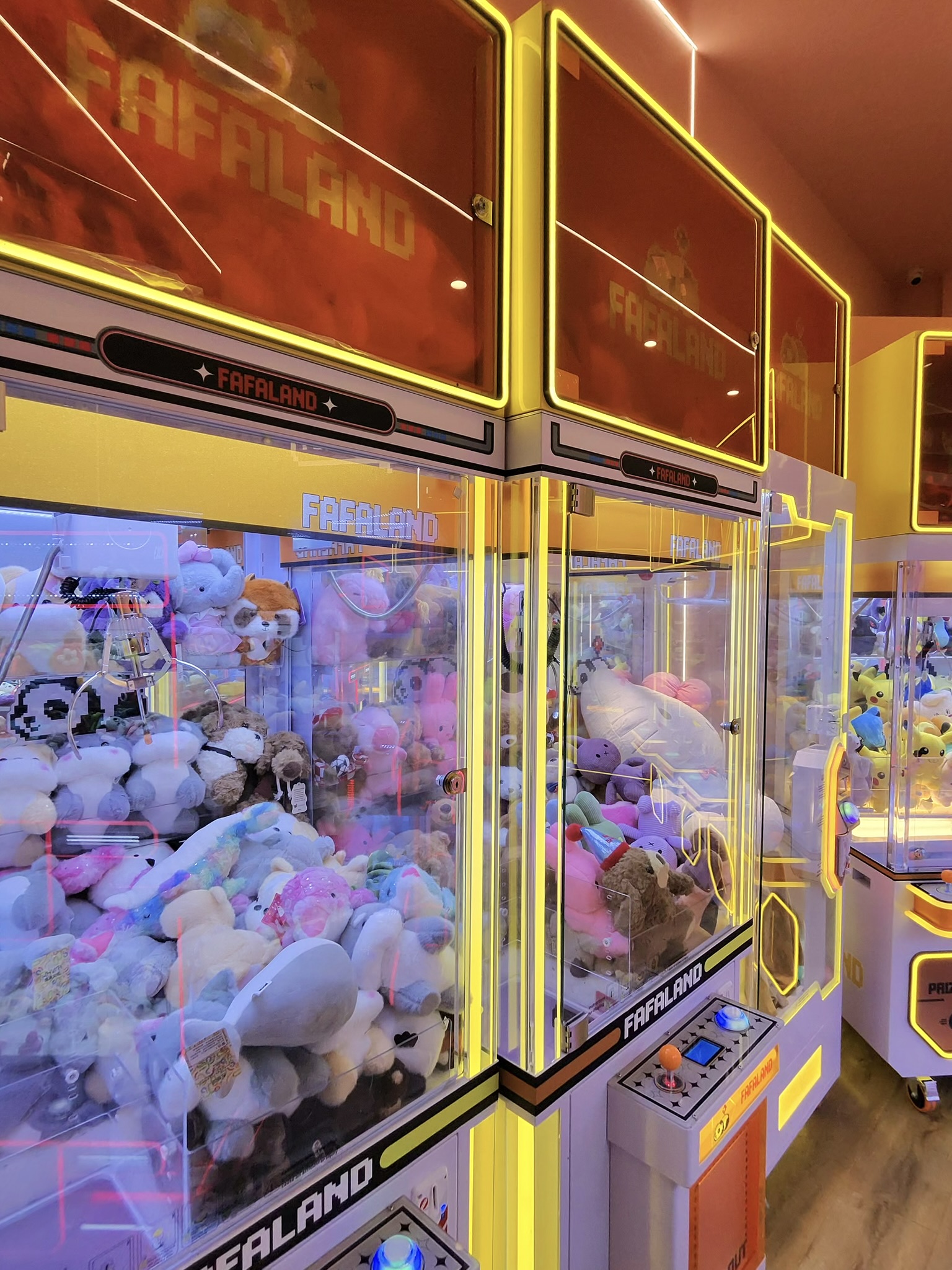
The toy rises.
For one second, it’s yours.
The claw swings towards the prize chute. The toy wobbles, slips and drops back into the pile.
“So close,” someone says. “One more go.”
Rosie has a question.
Was it bad luck, physics or something you couldn’t see?
You control a lot. You pick the prize, move the claw and decide when to drop it.
Physics matters too. A small, loose toy is easier to grab than a heavy one squashed between others. Where the prongs land makes a big difference.
Then there’s the part you can’t see. Inside some machines is a settings menu that only the owner can open.
You can see / You can’t see
| You can see | You can’t see |
|---|---|
| the joystick and button | how hard the claw squeezes |
| where you drop the claw | whether the grip loosens while it carries the toy |
| the prize’s shape and where it sits | which mode the machine is set to |
| how crowded the pile looks | how much prize value the owner wants to give out |
| the price of a go | when the machine was last serviced |
| what happened on your go | why it happened |
The right-hand column combines model-specific settings documented in manuals with information that may be unavailable. It does not tell us how this particular cabinet is configured.
Rosie read the manuals
Rosie went looking for the instruction manuals that claw machine makers give to arcade owners. These are the books used to set a machine up. Here is what some of them let an owner change.
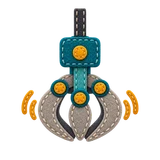 Grip strength. The claw can be set to squeeze strongly, medium or weakly.
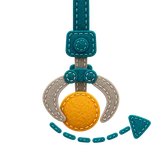 Grab, then carry. Some claws can grab hard, then loosen while carrying the toy to the chute.
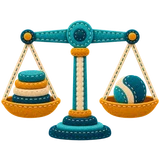 Payout. Some machines let the owner choose how much prize value comes out compared with the money going in. Depending on the model, the controller may adjust claw power to regulate that balance.
 Modes. Some machines give a strong grip after a set pattern of plays. Others give one at random times.

Why would a machine work like this? An arcade is a business. The owner has to balance the price of a go against prize costs, maintenance and other expenses. Settings like these help the owner keep that balance.
The controller uses an algorithm: a set of rules that uses settings to control what the claw does on each go. You can’t see the rules. You only see what happens.
Three fictional machines
Same aim. Different settings.
These machines were made up for Puppy vs Algorithms. Their settings are based on features described in real manuals. They don’t describe any particular machine you’ll find in an arcade.
Grab and carry
The toy was in the air. Then it wasn’t.
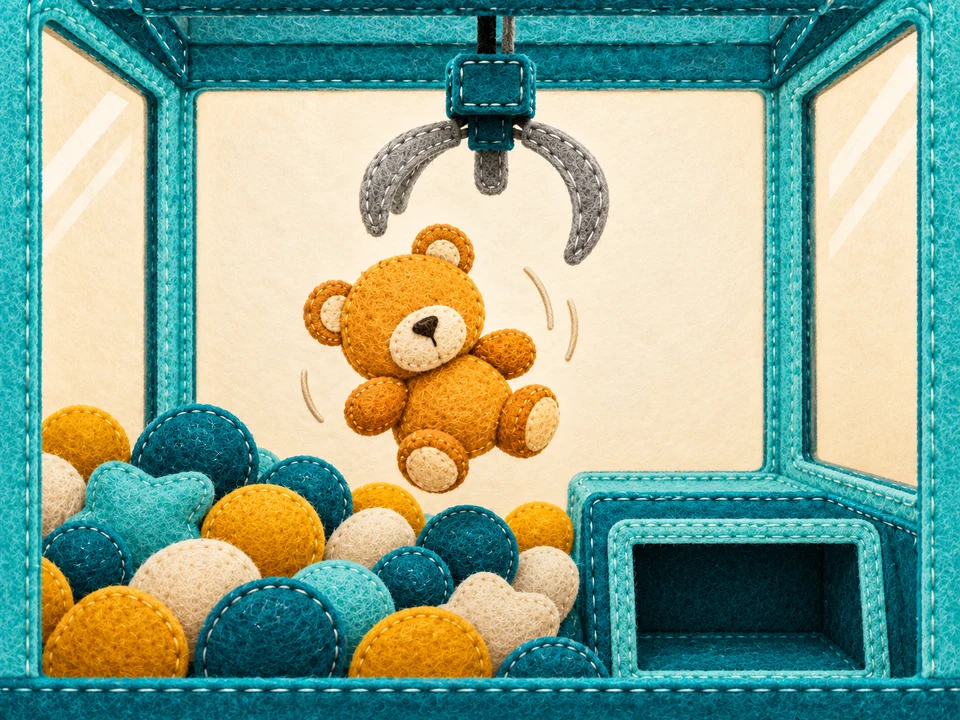
- What you can observe
- The claw grabs the toy firmly and lifts it. Halfway to the chute, the toy slips out.
- What may be happening
- The grip may be set to start strong and loosen during the carry.
- What to check
- Did the toy end up any closer to the chute?
Open the back panel of fictional machine 01
Settings for this fictional example
Grab: strong · Carry: weak
A stronger grip opportunity still requires a successful grab. These revealed settings are part of the teaching example, not a diagnosis from appearance alone.
AI-assisted illustration · fictional settings plate
Payout setting
Perfect aim. Floppy claw.
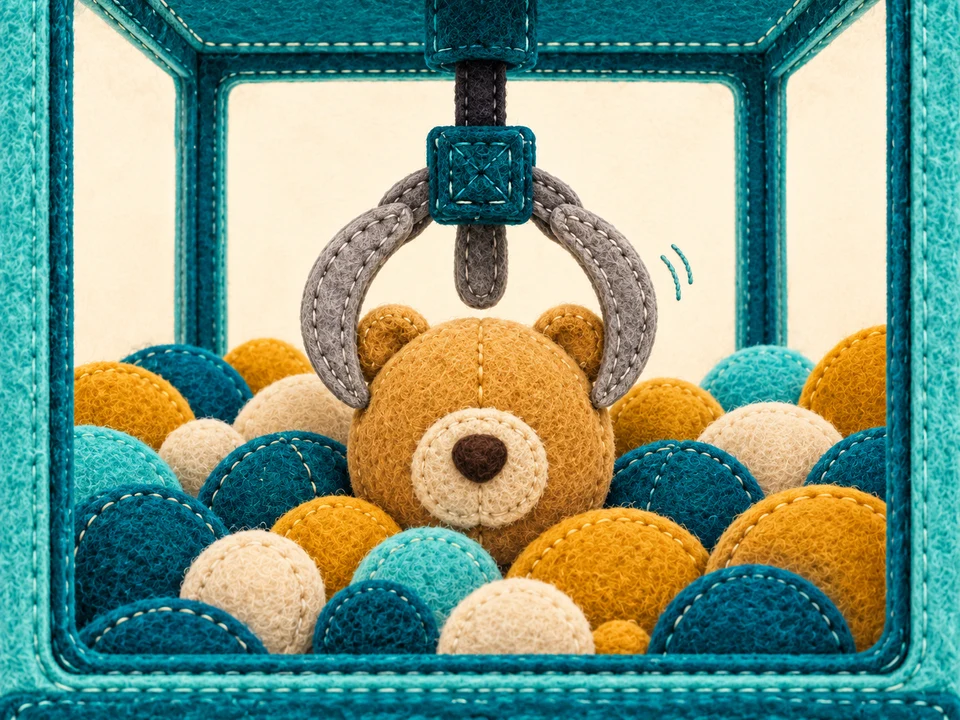
- What you can observe
- Your aim is spot on three times in a row. Each time the claw barely closes.
- What may be happening
- In this fictional example, the controller reserves stronger grip opportunities according to a payout-related setting.
- What to check
- Is there a sign explaining how this machine works?
Open the back panel of fictional machine 02
Settings for this fictional example
Payout setting: on · Stronger opportunity governed by the chosen payout setting
A stronger grip opportunity still requires a successful grab. These revealed settings are part of the teaching example, not a diagnosis from appearance alone.
AI-assisted illustration · fictional settings plate
Physics
It really was the toy.
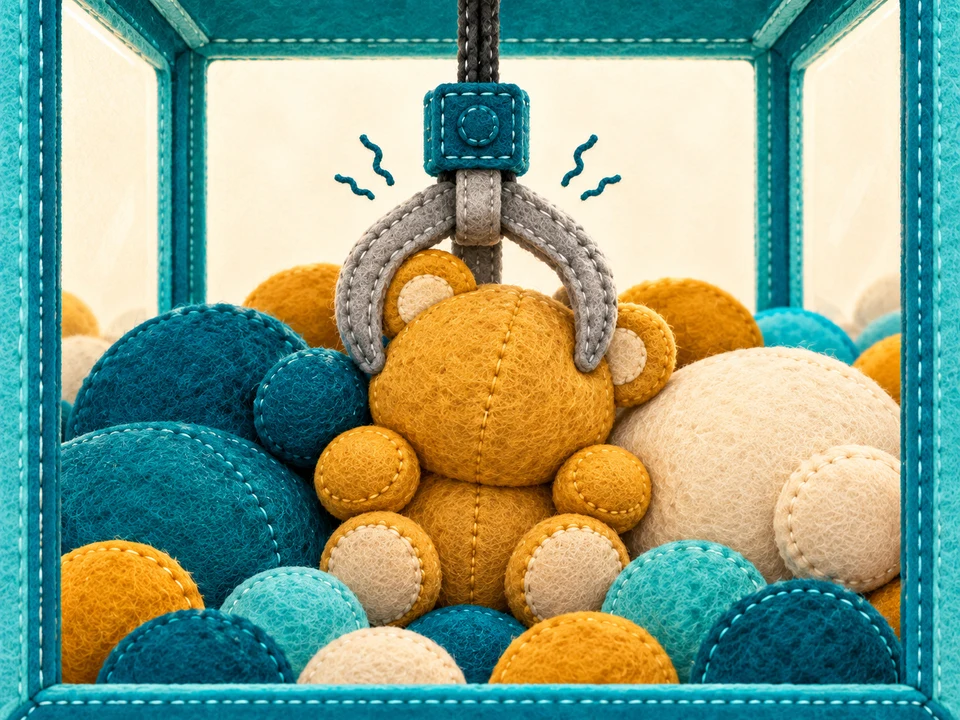
- What you can observe
- The claw grips hard every go. The toy you picked is heavy and wedged between two others.
- What may be happening
- The prize may be hard to lift even with a strong grip.
- What to check
- Is there a smaller or looser prize you could aim for?
Open the back panel of fictional machine 03
Settings for this fictional example
Grip: strong every go · No payout setting
A stronger grip opportunity still requires a successful grab. These revealed settings are part of the teaching example, not a diagnosis from appearance alone.
AI-assisted illustration · fictional settings plate
In a real arcade, you generally can’t inspect the operator’s settings. A lot of algorithms work like that. Your feed, your game and your claw machine show you results while some of their rules remain out of view.
Some machines tell you
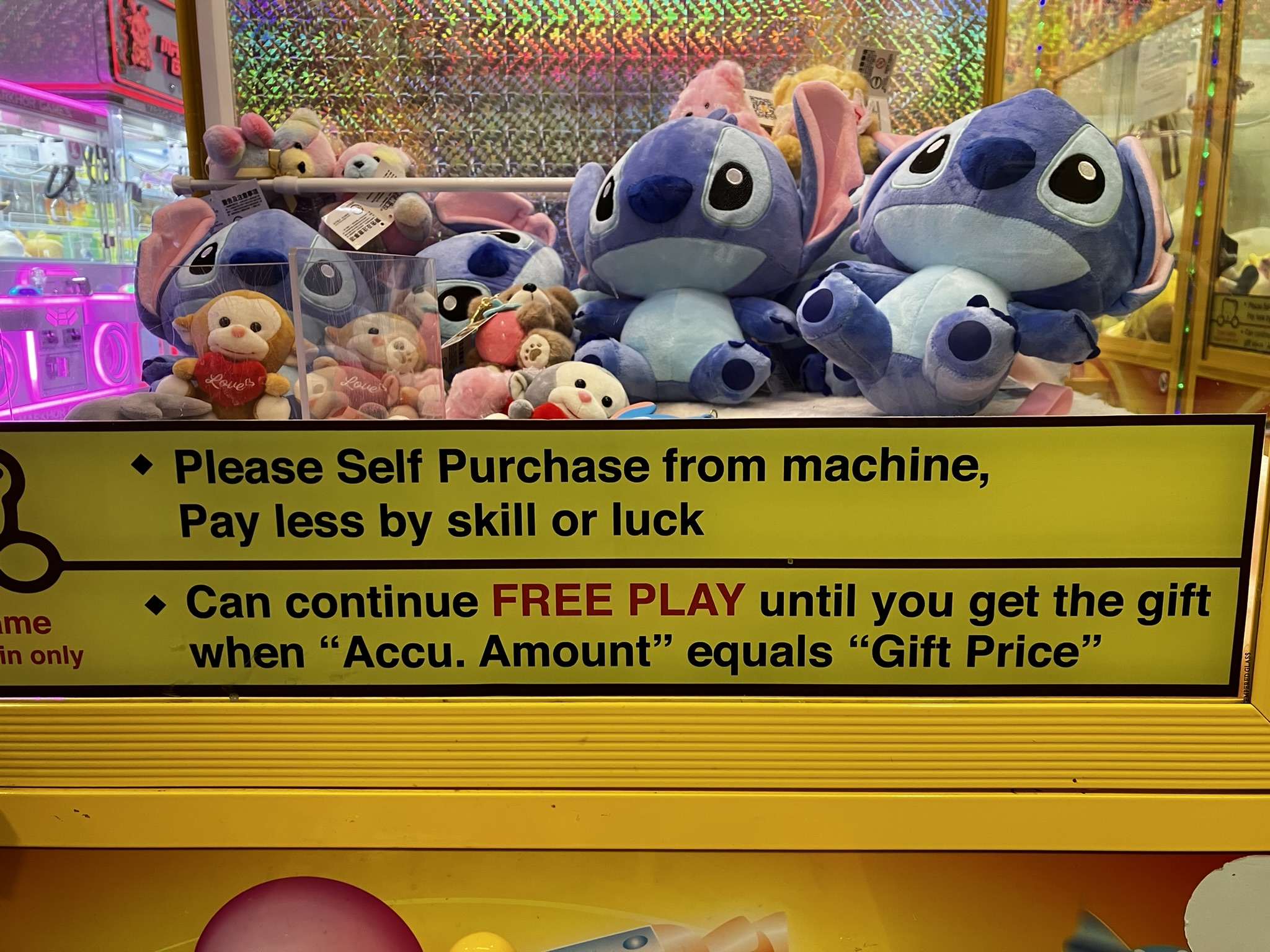
This machine has a sign that explains part of how it works. It says that once the total you’ve spent reaches the price of the gift, you can keep playing for free until you win it.
Rosie likes this kind of sign because it puts the rule out in the open. You can decide whether the gift is worth that price before you start. The sign tells us what the machine says it does. We haven’t tested it.
Is this allowed?
Each Australian state and territory has its own rules for claw machines, and they aren’t all the same. In Western Australia, regulation 18A covers certain mechanical prize-pickup machines. For covered machines, it sets location conditions, a maximum $5 charge per game and prizes in goods with a maximum retail value of $50. The rules elsewhere need their own check.
Rosie’s rule of paw
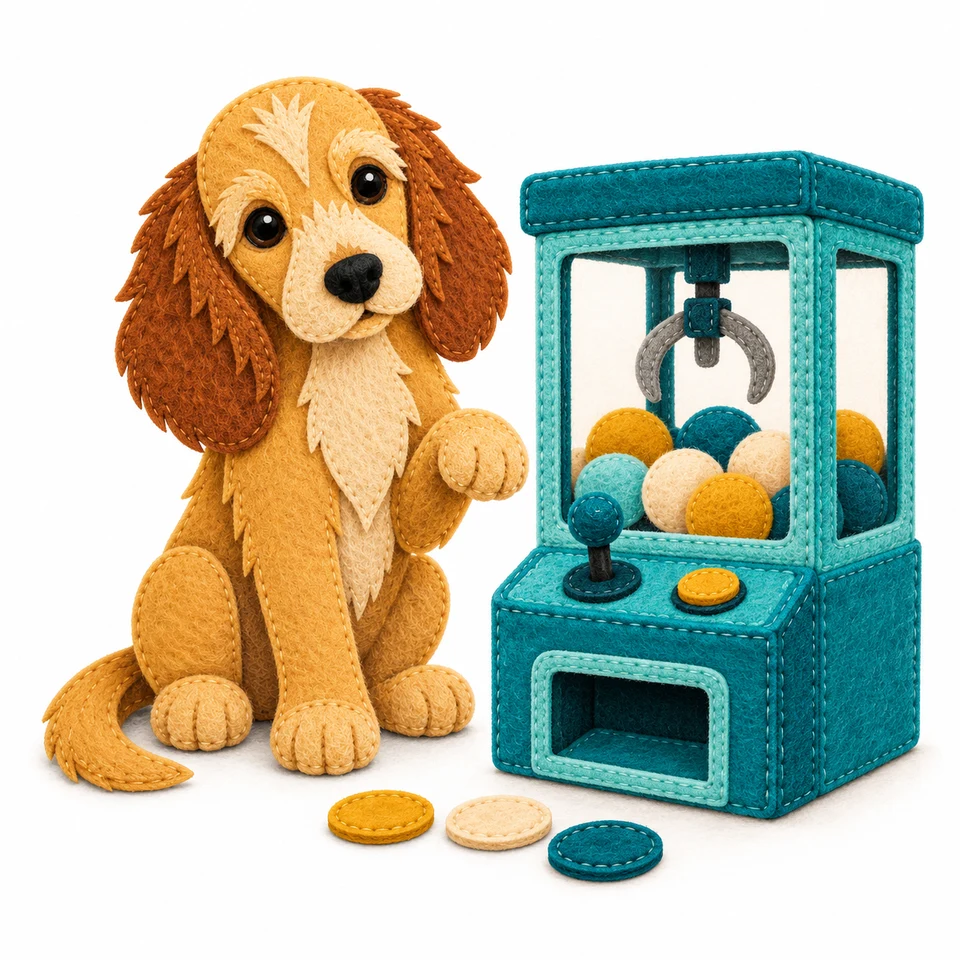
Choose your number of goes before you start. A wobble is still a miss.
Enjoy the lights, the challenge and the ridiculous plush toy. Just make the big decision before the claw does.
Evidence Trail
What this article is based on
- Neofuns. Single claw crane machine manual, V4.3. Uploaded 21 September 2017. Lists strong, medium and weak grip settings and a payout-ratio setting.
- Andamiro. Crazy Toy manual. File dated 21 February 2024. Describes several grip settings and fixed, random and vending modes.
- ELAUT. E-Claw MKII IntraXion controller manual. March 2018. Calculates a payout percentage from prize cost and price per play, with adjustable pickup and holding power.
- Really Big Crane Company. Operator manual. 2021. Separate grab, break and carry grip settings.
- Western Australia. Gaming and Wagering Commission Regulations 1988, regulation 18A. Current compilation from 1 January 2026. Sets limits on price per game, prize type and prize value for claw-style machines.
Limitations These manuals show what some named machines can do. They don’t show how any machine in an Australian arcade is set, or how common each setting is. The three machines in “Open the back panel” are fictional. The sign photograph shows what one machine displayed. It doesn’t prove the machine works that way.
Research date: 2 September 2026. WA regulation 18A checked against the current official compilation on 4 October 2026. Photographs taken by the PvA owner and published with permission; they show visible features, not internal settings.
Found an error or a newer source? Use the contact details on our About page.